

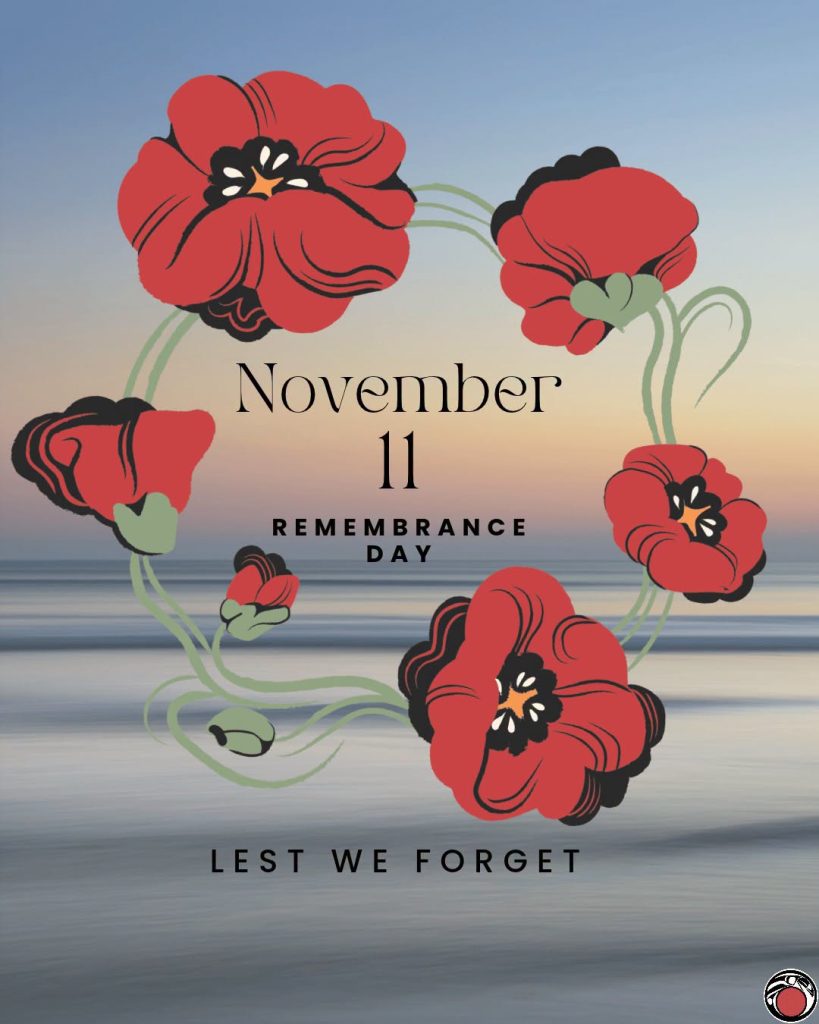
Every year on November 11, we take a moment to pause, reflect and remember. We pin a red poppy to our coats, attend local ceremonies, lay wreaths and observe two minutes of silence at 11 a.m. For many of us, it is a tradition we have grown up with, but how often do we stop and think about the history behind it?
Remembrance Day is about remembering the men and women who served our country, those who never made it home, and those who returned carrying memories and experiences that would stay with them for the rest of their lives. It is also about remembering the families who waited, worried and grieved, and the communities forever changed by war.
But there are parts of this history that deserve more attention, particularly the stories of Indigenous veterans who served Canada with courage, even though they were not always treated equally when they returned home.
There is also the story of the little red poppy we wear each November, and how it became such an important symbol of remembrance.
How Remembrance Day Began
Remembrance Day dates back to November 11, 1918, when the fighting of the First World War officially ended with the signing of the Armistice. At 11 a.m., the guns fell silent after more than four years of devastating conflict.
Canada first observed Armistice Day in 1919, and in 1931, November 11 officially became known as Remembrance Day.
Over time, the day grew to honour not only those who served in the First World War, but also Canadians who fought in the Second World War, the Korean War and other conflicts, as well as those who served in peacekeeping missions around the world.
Today, when we stand quietly at a cenotaph or listen to the Last Post, we are remembering real people with real stories. They were someone’s son, daughter, husband, wife, parent or friend. They had lives, families and dreams of their own.
And that is something worth remembering.
Remembering Indigenous Veterans
One part of Canada’s military history that has not always received the recognition it deserves is the contribution of First Nations, Métis and Inuit veterans.
During both World Wars, thousands of Indigenous people volunteered to serve Canada. Many left their homes and families to travel overseas, facing the same dangers, hardships and losses as other Canadian soldiers.
During the First World War, more than 4,000 Indigenous people served. One of the best-known was Francis Pegahmagabow, an Ojibwe soldier from Wasauksing First Nation in Ontario. He became one of Canada’s most decorated Indigenous soldiers, earning the Military Medal with two bars for his bravery and service.
Indigenous men and women continued to serve during the Second World War and in conflicts and peacekeeping missions in the years that followed.
What makes their stories particularly important is what happened when many of them came home.
Despite having served their country, First Nations veterans often faced discrimination and were denied equal access to benefits available to other returning soldiers. Some encountered barriers to pensions, education, housing and other support. In certain circumstances, they faced pressure to give up their Indian status to access particular benefits.
Think about that for a moment. These men and women had gone overseas to defend Canada, yet when they returned, they were not always treated as equals in the country they had fought for.
Their service deserves to be recognized, and their experiences deserve to be part of the history we share.
That is one reason November 8 is recognized as Indigenous Veterans Day in Canada. First observed in Winnipeg in 1994, it provides a dedicated opportunity to honour First Nations, Métis and Inuit veterans and recognize their sacrifices.
Their stories should never be forgotten or overshadowed. They are an important part of Canada’s history.
The Story Behind the Red Poppy
Have you ever wondered why we wear a red poppy?
The tradition goes back to the battlefields of the First World War in France and Belgium. After years of fighting, the land had been devastated by artillery and bombs. Yet, among the destruction and around the graves of fallen soldiers, bright red poppies began to grow.
The sight of these flowers became a powerful symbol of life, loss and remembrance.
A Canadian doctor and soldier, Lieutenant-Colonel John McCrae, helped make the poppy famous through his poem In Flanders Fields. He wrote it in May 1915 after the death of his friend, Lieutenant Alexis Helmer.
McCrae was deeply affected by the suffering he witnessed during the war and by the sight of poppies growing among the soldiers’ graves. His poem captured the sadness of war and the importance of remembering those who had died.
The poem touched people around the world and helped connect the red poppy with remembrance.
Two women also played an important role in making the poppy tradition what it is today. Moina Michael, an American teacher, was inspired by McCrae’s poem and began wearing and promoting red poppies in memory of fallen soldiers. French humanitarian Anna Guérin later helped promote handmade poppies as a way to raise money for people affected by the war.
In 1921, the poppy was adopted by Canada’s Great War Veterans Association, which later became part of the Royal Canadian Legion. Canada’s first Poppy Campaign followed that autumn.
Today, the poppy remains a symbol of respect for those who served and sacrificed. The Royal Canadian Legion’s annual campaign also raises money to support veterans and their families.
It is remarkable to think that such a small flower carries so much meaning.
Why It Is Important to Remember
Remembrance Day is about more than history books, ceremonies and wearing a poppy once a year. It is about remembering the people behind the uniforms and recognizing that their sacrifices helped shape the country we live in today.
It is also about making sure all their stories are told, including those of Indigenous veterans who served with courage but did not always receive the respect and support they deserved.
As we approach November 11, let’s take a little extra time to think about what remembrance really means. Remember the fallen, honour those who returned, recognize the families who carried the burden of war, and make room for the stories that have too often gone unheard.
And the next time you pin a red poppy to your coat, remember where it came from and what it represents.
Behind every poppy is a story. Behind every name on a memorial was a life. And behind every act of service was someone who left home, not knowing what the future would hold.
We remember their courage, their sacrifices and their service. Most importantly, we remember that peace should never be taken for granted.
Lest We Forget.





Comments